
The Ultimate Guide to CubeSat Structure 1U, 2U, 3U: High-Performance Solutions from KSF Space
In the rapidly evolving landscape of the 2026 space industry, the demand for reliable, high-performance, and cost-effective nanosatellite frameworks has never been higher. Whether you are a research institution, a commercial startup, or a government agency, selecting the right CubeSat structure 1U, 2U, 3U is the most critical decision in your mission’s lifecycle.
KSF Space has emerged as a global leader, disrupting the market by providing the world’s most affordable CubeSat structures without compromising on flight heritage or material science. In this comprehensive guide, we explore why the KSF Space catalog featuring advanced Laser Melted Aluminum and high-performance PA11 is the gold standard for modern orbital missions.
High-Performance Metal: Laser Melted Aluminum CubeSat Structure 1U, 2U, 3U
For missions requiring maximum structural rigidity and thermal conductivity, the Laser Melted (DMLS) Aluminium frames from KSF Space represent the pinnacle of additive manufacturing.
Why Choose Laser Melting (Metal) for Your Mission?
Traditional CNC machining often limits design complexity. By utilizing Laser Melting, KSF Space allows engineers to incorporate organic geometries, internal cable routing, and lattice structures that significantly reduce mass while maintaining extreme stiffness.
- Material:Aerospace-grade Aluminium (AlSi10Mg).
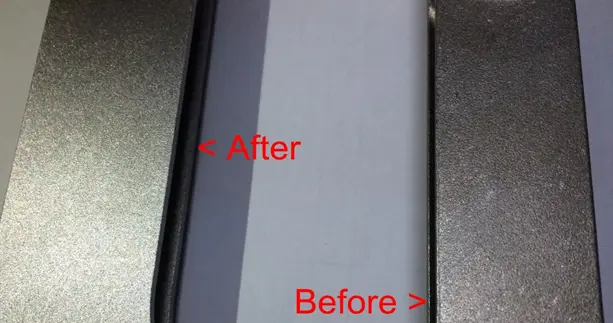
- Finish:Professional Shot Peened
- Best For:High-vibration launches, deep-space exploration, and thermal-heavy payloads.
The shot peened finish is not just for aesthetics. This mechanical process bombards the surface with spherical media to create a layer of compressive residual stress.1 This effectively prevents micro-cracks and fatigue failure during the violent acoustic environment of a rocket launch.
KSF Space Metal Pricing vs. Market Average
KSF Space is currently offering these high-strength, flight-ready components at prices significantly lower than the market average:
| Size | Market Average | KSF Space Price | Savings |
|---|---|---|---|
| 1U | $1,500+ | $1,000 | 20% |
| 2U | $2,700+ | $2,000 | 21% |
| 3U | $4,200+ | $2,500 | 31% |
Lightweight Innovation: PA11 CubeSat Structure 1U, 2U, 3U
For teams focused on rapid prototyping or weight-sensitive suborbital missions, KSF Space offers a specialized polymer line manufactured via Multi Jet Fusion (MJF).
The PA11 Advantage
PA11 is a bio-sourced nylon known for its high ductility and impact resistance. Unlike standard 3D-printed plastics, PA11 from KSF Space maintains its mechanical properties across wide temperature ranges.
Using PA11 with Multi Jet Fusion (MJF) technology is a major technical advantage. MJF provides much higher structural density and better isotropic properties than standard FDM (filament) printing.
- Raw Finish:A professional grey industrial look.
- Smooth Black Finish:A chemically smoothed, dyed black finish that improves outgassing profiles and provides a sleek, space-ready appearance.
- Weight Savings:Up to 50% lighter than traditional metal frames.
1. Why Multi Jet Fusion (MJF) Matters
Most “cheap” plastic structures are FDM (filament). They have air gaps and are weak between layers.
“Our MJF technology uses a powder-bed fusion process that creates 99.9% dense structures. This ensures your satellite has the structural integrity of a solid block, preventing layer-delamination during high-G launch vibration.”
2. Finish Options: Grey Raw vs. Black Smooth
Different missions have different thermal needs.
- Grey Raw:Perfect for thermal testing and missions where cost is the absolute priority. It provides a non-reflective, matte finish.
- Black Smooth (Vapor Honed):This finish is superior for flight. It reduces the surface area (preventing microscopic debris) and increases the emissivity.
“Choose our Black Smooth finish for improved thermal radiation and a professional, flight-ready aesthetic that meets the strictest cleanroom standards.”
| Size | Market Average | KSF Space Price | Savings |
|---|---|---|---|
| 1U | $700+ | $500 | 24% |
| 2U | $1,000+ | $700 | 29% |
| 3U | $1,500+ | $1,000 | 31% |
While metal is preferred for primary structural loads in LEO, the KSF Space PA11 CubeSat structure 1U, 2U, 3U is an excellent choice for educational kits and experimental secondary payloads.
Proven Flight Heritage: From Mexico to the Stratosphere
One of the biggest risks in the space sector is “infant mortality”—hardware failing on its first flight. KSF Space mitigates this risk through a robust history of successful missions.
This suborbital or orbital flight heritage confirms that KSF Space structures can survive the vacuum of space, extreme thermal cycling, and high-G launch profiles. When you purchase a CubeSat structure 1U, 2U, 3U from KSF Space, you are buying hardware that has already survived the harshest conditions known to man.
Why KSF Space is the #1 Choice for 2026
- Cost:Unbeatable pricing on CubeSat structure 1U, 2U, 3U.
- Performance:Choice between Shot-Peened Aluminum or MJF PA11.
- Simplicity:Modular designs that allow for 15-minute assembly.
Trust: Years of heritage with international clients and suborbital successes
Take Your Mission to Orbit with KSF Space
The path to space is paved with challenges, but your satellite’s frame shouldn’t be one of them. With the cheapest prices in the market and a pedigree of flight-proven performance, KSF Space is the definitive partner for your next launch.
Whether you need the rugged durability of a shot-peened metal 3U frame or the lightweight flexibility of a PA11 1U prototype, KSF Space delivers the quality you need at a price that keeps your budget on track.
Finish Shot peened sample
Download Structure Technical Vibration & Thermal Test by KSF Space (PDF)
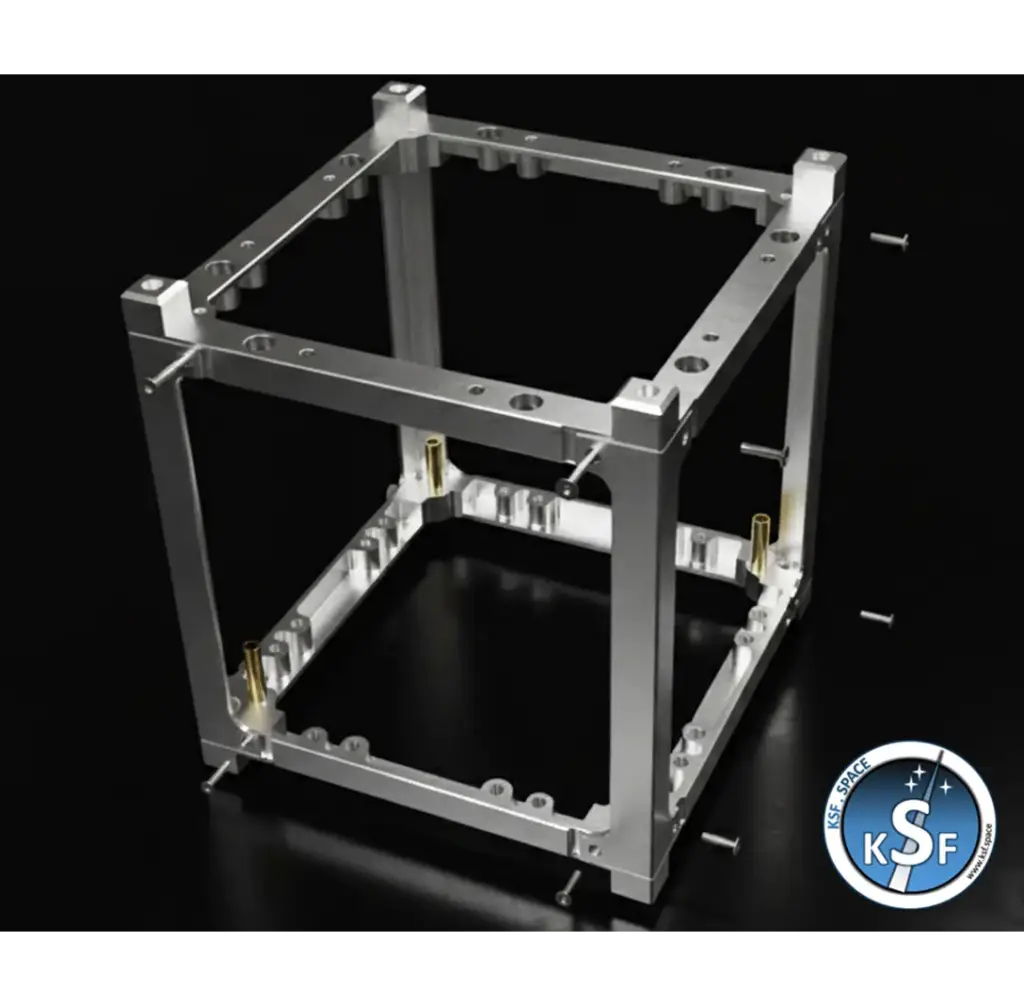
1U Structure Laser Melted Aluminum (a high-strength, flight ready component) Highest Performance
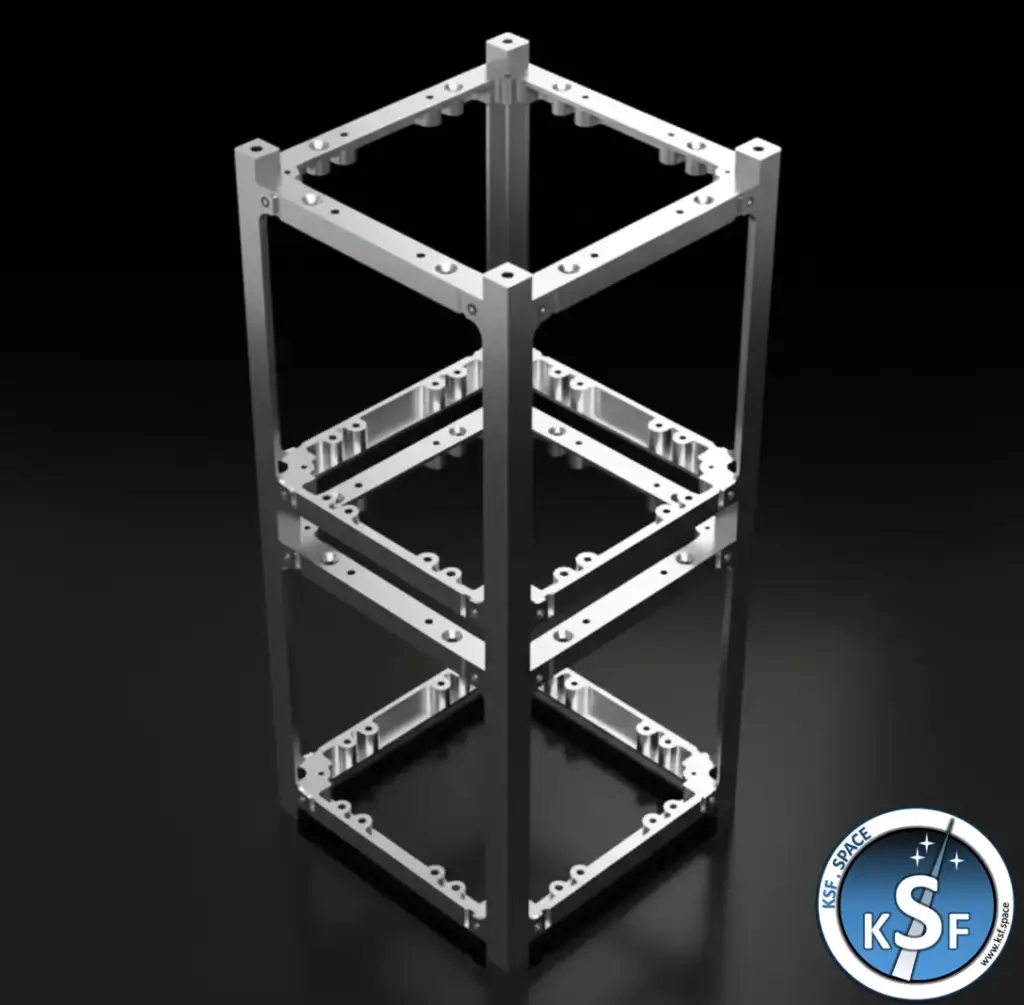
2U Structure Laser Melted Aluminum (a high-strength, flight ready component) Highest Performance
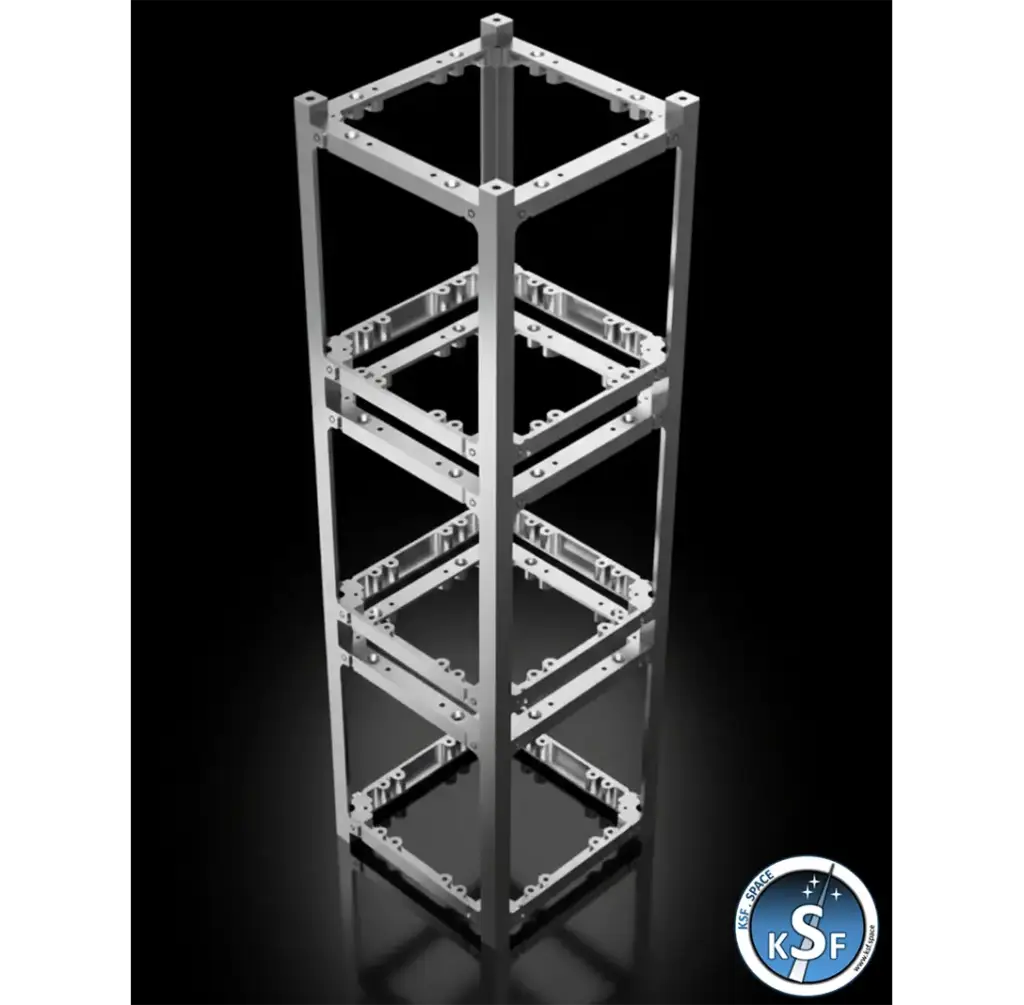
3U Structure Laser Melted Aluminum (a high-strength, flight ready component) Highest Performance
We bridge the gap between ambitious orbital goals and the rigorous reality of spaceflight. Our 1U, 2U and 3U CubeSat structures are engineered not just to fit a dispenser, but to protect your mission’s most critical assets through the harshest environments.
Every chassis we produce is validated against the NASA-GSFC-STD-7000 (GEVS) framework. By utilizing advanced SOLIDWORKS Flow Simulation Analysis, we ensure that our structures maintain a minimum Factor of Safety and provide optimized thermal pathways for high-duty cycle electronics. We understand that in a vacuum, thermal management is your biggest hurdle; that’s why our frames are designed with specific conductive interfaces and emissivity-controlled finishes to ensure your components stay within the ±10°C Qualification Margin required by NASA and ESA. When you choose our structure, you aren’t just buying a frame , you are buying a flight certified foundation that has been mathematically proven to survive the launch pad and thrive in the void.
As featured on Satnews

KSF Space Commercializes Additive-Manufactured CubeSat Structures
Thermal equilibrium highlights KSF Space's expertise
