The global space sector is undergoing a massive shift. What was once the exclusive playground of multi-billion-dollar government agencies is now an accessible frontier driven by small satellites—modular, cost-effective, and highly efficient platforms transforming modern research. Yet, navigating the complexities of launch logistics, regulatory compliance, hardware engineering, and orbital testing remains a steep challenge.
For universities, private industries, STEM educators, and R&D hubs worldwide, the primary challenge is execution. That is where a dedicated Cubesat Company NGO like the KSF Space Foundation changes the equation, acting as a bridge between bold terrestrial concepts and successful orbital deployment.


Why a Cubesat Company NGO is Essential for Modern Space Missions
Entering the NewSpace market requires an intricate balance of technical capability and immense financial investment. For a typical commercial aerospace enterprise, profit margins drive up the cost of consulting, environmental testing, and launch placement, placing orbital research out of reach for many academic institutions and growing research hubs.
As a registered US non-profit organization (Delaware Registration #5605031), the KSF Space Foundation operates with a fundamentally different objective: democratizing access to space. By functioning as a specialized non-governmental organization, it channels resources, engineering expertise, and strategic partnerships directly into reducing the barriers to entry for low-orbit development.
Bridging the Experience Gap
Many organizations possess brilliant scientific hypotheses but lack the legacy expertise needed to build flight-ready hardware. This non-profit framework fills the operational void by connecting emerging institutions with seasoned specialists who have successfully managed, designed, and launched small satellite payloads. This collaborative ecosystem translates complex orbital mechanics and radio licensing into structured, manageable phases for engineering teams worldwide.
Accelerating R&D and Academic Breakthroughs in Low Earth Orbit (LEO)
The scientific utility of a miniature satellite footprint spans nearly every modern discipline. By utilizing highly standardized, modular structural kits, researchers can deploy complex instrumentation directly into Low Earth Orbit or suborbital near-space environments at a fraction of standard historical costs.
The KSF Space Foundation actively provides comprehensive end-to-end mission support and technical infrastructure across several high-impact research areas:
Advanced Earth and Space Observation:
Hosting high-resolution imaging, remote sensing arrays, and deep-space astronomical sensors.
Microgravity Biological Testing:
Tracking the effects of space environments on biological cells, pharmaceutical compounds, and agricultural samples.
Atmospheric and Ecological Data Science:
Measuring real-time climate variables, greenhouse gases, and weather patterns to enhance global environmental strategies.
In-Orbit Technology Demonstrations (Tech Demos):
Providing an affordable testing ground for private enterprise hardware, novel sensors, and next-generation communications before full-scale deployment.
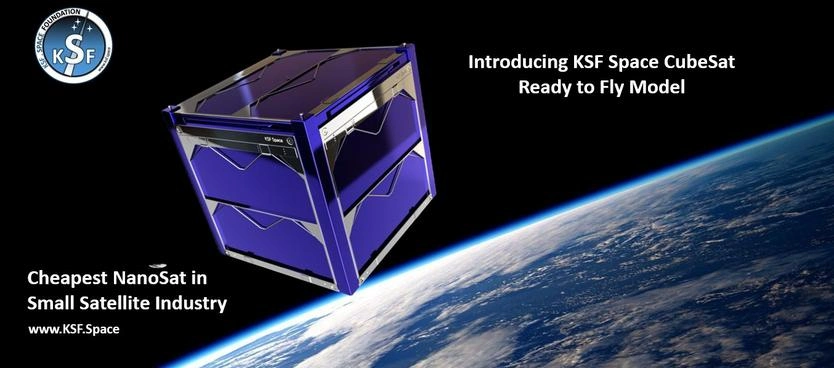
For commercial companies seeking prompt space-qualification of their proprietary components, utilizing a specialized Cubesat Nanosatellite structural platform allows for rapid iteration loops, proving flight heritage without risking excessive capital.
Instilling Uncompromising Credibility and Technical Validation Across the Space Sector
In the space industry, credibility is the ultimate currency. Hardware designed for the harsh environments of near-space or LEO must meet rigorous testing and quality criteria to ensure mission success. The KSF Space Foundation establishes this trust through deep domain expertise and structured framework validations. Notably, its operational methodologies and educational suites are certified by the International Federation of Global and Green Information Communication Technology (IFGICT), ensuring international benchmarks for quality and administrative excellence are met.


Building Tomorrow's Workforce: NEP Courses
Beyond physical hardware integration, sustainable entry into space exploration requires a deeply knowledgeable workforce. To address this, specialized training tracks like the Nanosatellite Engineering Professional (NEP) certification paths have been carefully designed.
These educational tracks provide university students, private corporate teams, and engineering researchers with a verifiable, industry-aligned foundational curriculum. Participants master the practical realities of small satellite development, structural engineering, power budgets, and telemetry systems. By marrying academic theory with certified industry execution, these courses turn standard university laboratories into active space-readiness centers.
Turnkey Technical Ecosystem: From Custom Structural Kits to Suborbital Launch
A common bottleneck for emerging space programs is sourcing reliable hardware that guarantees seamless integration during launch day staging. The KSF Space Foundation mitigates this risk by providing tailored technical solutions designed to meet the exact parameters required by primary launch integrators.
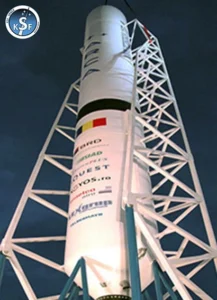
Whether a mission requires a brief suborbital flight to gather high-altitude atmospheric data or a long-duration deployment into Low Earth Orbit, the foundation coordinates the intricate logistics behind rocket staging and orbital placement. This includes coordinating assets like the Jupiter rocket program and near-space balloon flights, ensuring that high-priority experiments reach their destination safely, on budget, and within structured timelines.
Drive Your Space Vision Forward: Partner with KSF Space
The next giant leap for your company, university department, or research center does not require a government-scale budget. It requires a dedicated, credible partner committed to turning your scientific hypotheses into verified flight data. By collaborating with a premier Cubesat Company NGO, your team gains immediate access to certified training programs, expert systems engineering, and highly cost-effective launch capabilities.
Don’t let budget constraints or experience gaps limit your organization’s scientific potential. Secure flight heritage, advance your local R&D capabilities, and empower your technical teams with the premier non-profit platform designed entirely for global space democratization.
To explore customized mission support packages, request detailed technical schematics for modular satellite platforms, or enroll your engineering team in the upcoming Nanosatellite Engineering Professional (NEP) certification course, contact the operational headquarters directly.
Frequently Asked Questions (FAQ)
What makes KSF Space Foundation different from a standard commercial Cubesat company?
As a registered non-profit organization rather than a commercial entity, the foundation operates on an at-cost support model. Instead of driving up costs for profit margins, all resources are channeled directly into reducing expenses, offering expert mentorship, and enabling institutional access to orbit.
Who can apply for mission support and hardware access with the foundation?
Support is available globally to a diverse range of sectors, including academic universities, secondary STEM education programs, private industrial research groups, independent R&D centers, and commercial aerospace companies seeking rapid tech demos.
How does the Nanosatellite Engineering Professional (NEP) course benefit university teams?
The NEP curriculum delivers a structured, certified training framework that equips students and faculty with the exact engineering competencies needed to build space-qualified hardware. It ensures that university teams have the rigorous knowledge required to confidently pass strict pre-launch inspection criteria.
What space environments can my organization access through these programs?
The foundation provides structured avenues into multiple environments based on your research goals, including near-space atmospheric levels, suborbital test flights, and long-term deployment into Low Earth Orbit (LEO).
Would you like to know more about the specific mission support packages KSF Space Foundation offers for LEO or Near-Space projects?
Contact : info@ksf.space