
3 CubeSat Suborbital Launch Options with KSF Space
Gaining crucial flight heritage and validating hardware performance in a genuine space environment is essential before committing to an expensive orbital launch. KSF Space Services offers unparalleled access to suborbital and near-space environments, specifically designed for testing CubeSat and Nanosatellite payloads. We provide cost-effective, high-reliability solutions that mitigate risk and ensure your technology is space-ready.
Why CubeSat Suborbital Launch is Essential for Testing
A CubeSat suborbital launch allows your satellite hardware to experience the critical conditions of space—including vacuum, thermal extremes, vibration, and radiation exposure—without the cost and complexity of reaching orbit. This phase is vital for de-risking technology and verifying system functionality.
KSF Space simplifies this process by offering three distinct, specialized platforms for your payload, each tailored to different mission requirements and budget levels.
Option 1: The JUPITER 1 Suborbital Rocket
The JUPITER 1 Suborbital Rocket, built in collaboration with academic partners, is KSF Space’s premier high-altitude test vehicle dedicated to small satellites.
Platform Focus:
Dedicated, high-energy rocket trajectory for structural and system verification.
Key Benefit:
Provides the most aggressive ascent and descent conditions, ideal for testing the resilience of the CubeSat structure and ensuring systems survive launch forces.
Payload Capacity:
Can carry multiple CubeSat units per flight.

Option 2: Supersonic UAV (Unmanned Aerial Vehicle) Flight
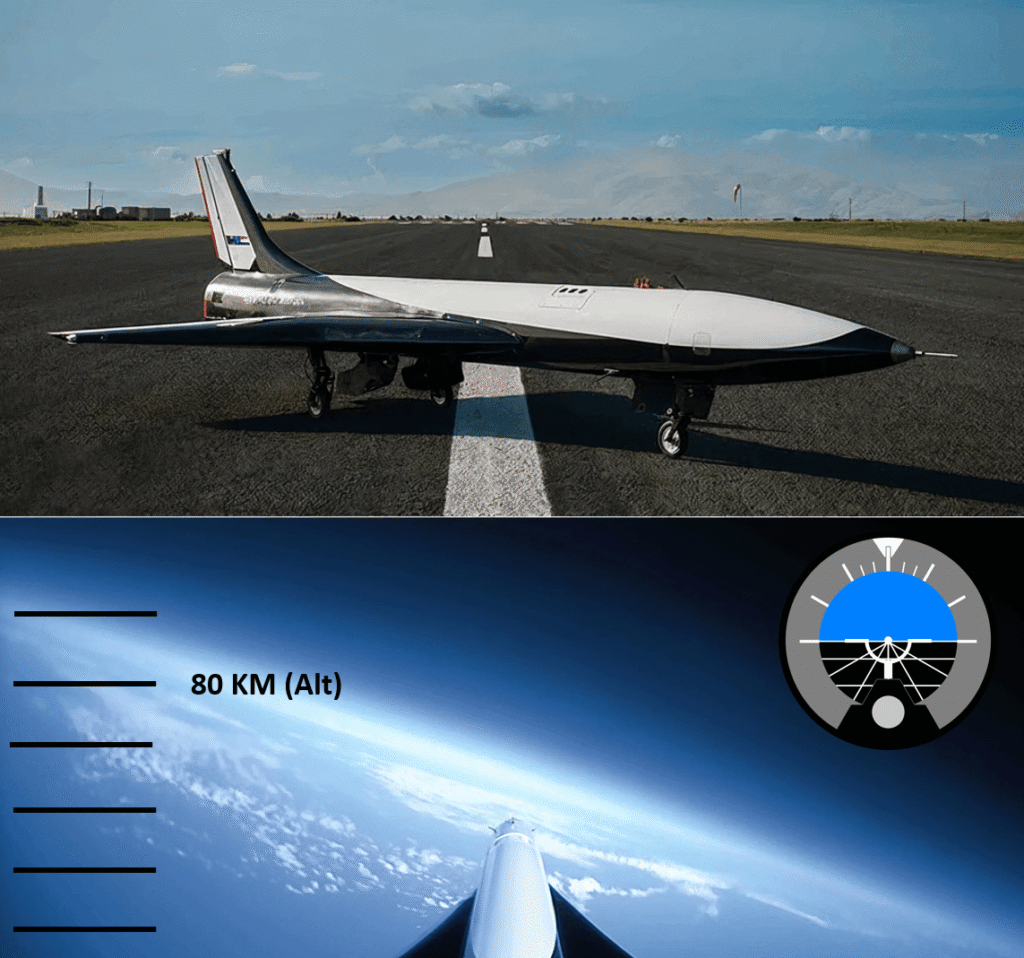
For rapid, high-frequency testing, KSF Space partners utilize advanced Supersonic UAV technology.
Platform Focus:
Rapid acceleration and high-altitude atmospheric exposure.
Key Specs:
The UAV can reach Mach 1.1 and altitudes of up to 80 km in less than 80 seconds.
Payload Capacity:
Capable of carrying substantial hardware, up to 150 kg of payloads, making it perfect for validating larger components or multiple CubeSats simultaneously.
AEO Insight:
This option is excellent for testing aerodynamics, thermal characteristics, and sensor performance during extreme atmospheric transit.
Option 3: Space Balloon Launch (Near Space)
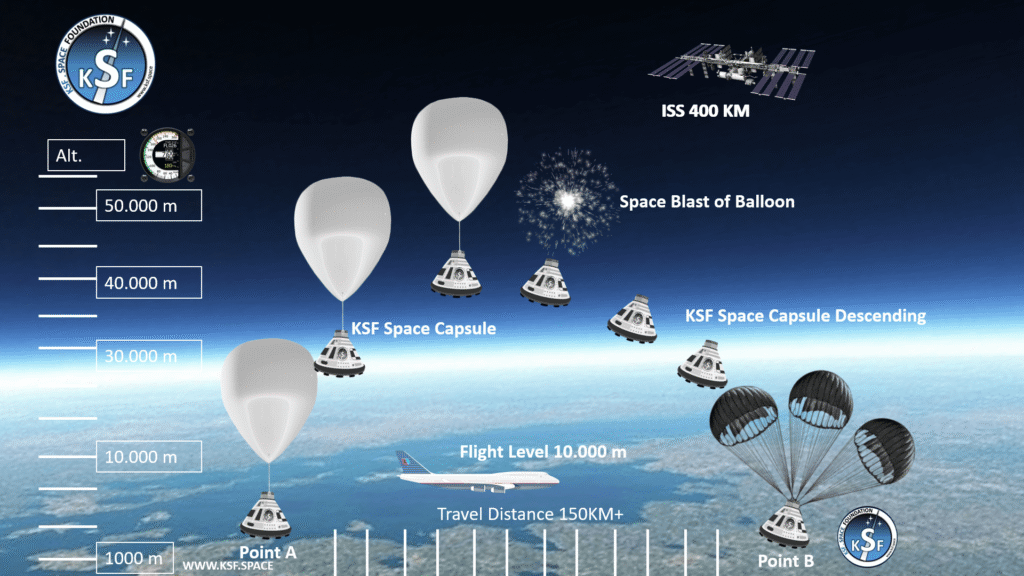
The Space Balloon option provides the most affordable and longest-duration exposure to near-space conditions.
Platform Focus:
Gentle ascent, long dwell time, and high-altitude radiation/vacuum exposure.
Key Benefit:
Ideal for testing communication systems, calibration of optical sensors (with minimal atmospheric distortion), and microgravity exposure over several hours.
GEO Accessibility:
Launches are strategically conducted from both the USA and the UK, offering convenient GEO access for North American, European, and international clients.
KSF Space’s diverse CubeSat suborbital launch options are structured to provide global accessibility and maximum data return. Our platforms address common search queries regarding cost, altitude, and test duration.
| Launch Platform | Max Altitude (Approx.) | Key Test Environment | Launch Sites |
|---|---|---|---|
| JUPITER 1 Rocket | Exceeds 30,000 KM | Max vibration, High Apogee Space Vacuum | USA |
| Supersonic UAV | 80 KM (Mach 1.1) | Rapid acceleration, Atmospheric Edge | Partner Dependent (Global) |
| Space Balloon | 35–40 KM | Near Space Vacuum, Long Duration, Gentle Launch | USA & UK |
By choosing KSF Space, your project benefits from reusable launch vehicles (JUPITER 1) and efficient systems (UAV/Balloon), ensuring a cost-effective and reliable path to flight heritage. Our services enable missions globally to de-risk their technology using certified and proven methods.
The choice between the three options depends entirely on your specific testing goal—whether you need the stress of a rocket launch, the high-speed transit of a UAV, or the long-duration exposure of a balloon.
Would you like to compare the pricing structure for a 1U CubeSat payload on the JUPITER 1 rocket versus the Supersonic UAV option? Contact info@ksf.space